

CLTANT Delegation Visits Melbourne for Professional Exchange at JNU Chinese Language and Culture School

Updated: Jun 7
In a significant initiative to strengthen cross-regional collaboration and advance the quality of Chinese language education in Australia, the Chinese Language Teachers’ Association of the Northern Territory (CLTANT) recently organised a professional exchange visit to Melbourne. Representing the Northern Territory were Mr Jian Wu, Chairperson of CLTANT based in Darwin, and Mr Jinyi Wu, Secretary of the Association.
The visit centred around an in-depth observation and exchange programme with the renowned JNU Melbourne Chinese Language and Culture School (暨华语言文化学校), a leading community-based Chinese language institution located in Melbourne’s eastern suburbs—widely recognised as one of the most competitive hubs for Chinese language education in Australia.

Exploring Excellence in Victoria’s Chinese Language Education Sector
Victoria, particularly Melbourne’s eastern region, has long been regarded as a national leader in community language education. With its well-developed infrastructure, robust curriculum frameworks, and highly experienced teaching workforce, the region provides a rich landscape for pedagogical innovation and excellence in Chinese language teaching.
Against this backdrop, the CLTANT delegation’s visit was both timely and purposeful. Over the course of the visit, Mr Jian Wu and Mr Jinyi Wu engaged in classroom observations, teacher discussions, and strategic dialogue with school leadership, aiming to draw valuable insights that could be adapted and implemented within the Northern Territory context.
A Distinguished Leader: Principal Ms Xiumei Li
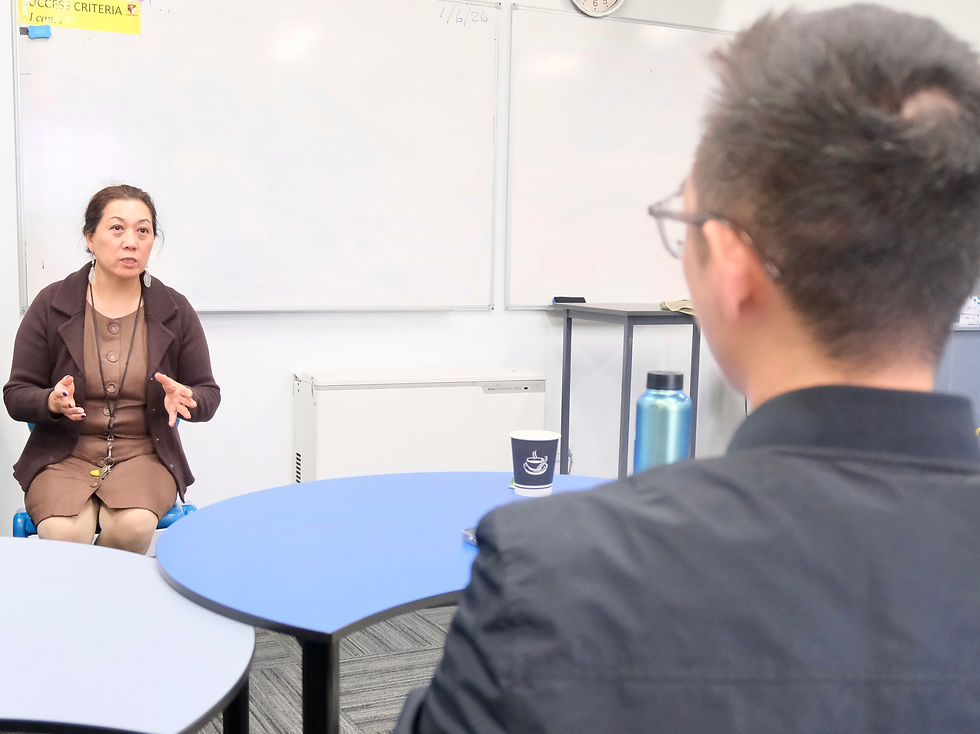
At the heart of JNU Melbourne Chinese Language and Culture School is its highly respected principal, Ms Xiumei Li, whose distinguished career and unwavering dedication have significantly shaped Chinese education in Melbourne.
Ms Li is a graduate of Jinan University (暨南大学)—one of China’s most prestigious institutions, particularly renowned for its focus on overseas Chinese education. Following her graduation, she remained at the university as a lecturer, laying a strong academic foundation for her future career.
In 1993, Ms Li migrated to Australia, where she has since devoted over three decades to Chinese language education. Her journey reflects not only professional excellence but also a profound commitment to community service and cultural transmission.
She previously served as Principal of the well-known Xin Jin Shan Chinese School, Southeast Campus (Nazareth College), for 14 years. During her tenure, she earned widespread recognition, including the “Teaching Excellence Award”, and led her teaching team to achieve outstanding reputations both within the school and across the broader educational community.
Building a Leading Community Language Institution

Driven by a vision to create a high-quality, inclusive Chinese language learning environment, Ms Li co-founded the JNU Melbourne Chinese Language and Culture School together with alumni from Jinan University. Supported by its parent institution, the school has rapidly developed into a modern, professional, and well-structured organisation.
Today, the school operates as a non-profit, non-religious community language school registered under Australian law. It offers a comprehensive educational pathway, including:
Early childhood and preschool programmes
Primary and secondary levels (Years 1–10)
VCE Chinese Second Language
VCE Chinese Second Language Advanced
VCE Chinese First Language
With two campuses and nearly 300 enrolled students, the school has demonstrated strong growth and continues to expand its reach within the community.
Its curriculum emphasises Mandarin pronunciation (Hanyu Pinyin), standard Mandarin, and simplified Chinese characters, primarily using the Jinan University “Chinese” textbook series. Teaching is delivered by experienced educators who incorporate multimedia tools and differentiated instruction to maximise student engagement and learning outcomes.
A Holistic Approach to Education and Community Engagement

Beyond academic success, Ms Li is deeply committed to community development and cultural preservation. She has played a pivotal role in establishing several influential organisations, including:
Casey Friendship Association
Casey Chorus
Casey Qipao Club
Her leadership also led to the creation of the Neighbourhood Watch and Aid Group, which provides vital support to local residents and fosters mutual assistance within the community.
Under her direction, numerous large-scale cultural events—such as “Splendid Moonlight”, “Lantern Festival Reunion”, “Love in the Mid-Autumn Festival”, and “Respect for the Elderly Gala”—have been successfully organised, earning widespread acclaim and strengthening community cohesion.
In addition, Ms Li holds multiple leadership roles, including:
Honorary President, JNU Alumni Association (Melbourne)
President, Casey Friendship Association
Supervisor, Victorian Chinese Federation
Director, Victorian Chinese Women’s Association
Her enduring passion for Chinese language education and cultural promotion has made her a highly respected figure across both educational and community sectors.
Classroom Observations: From Primary to VCE
During the visit, the CLTANT delegation engaged extensively with teachers across different year levels, gaining firsthand insights into classroom practices spanning from early childhood education to senior secondary VCE programmes.
Primary Classroom Experience
One of the highlights was a visit to a Year 4 class taught by Ms Ni. The lesson demonstrated a remarkable alignment with teaching materials commonly used in mainland China, showcasing how students in Australia can engage with Chinese language texts at a level comparable to their peers overseas.
The classroom atmosphere was vibrant and interactive. Students actively participated in discussions, storytelling, and structured exercises, reflecting a high level of engagement and enthusiasm. Teaching strategies incorporated story-based learning, interactive questioning, and differentiated instruction tailored to individual abilities.
This experience prompted reflection among the visiting educators on how Australian curriculum frameworks could be more closely integrated with classical and contemporary Chinese texts to enrich language learning.
Senior Secondary Teaching: Flexibility and Expertise

The delegation also observed a VCE Chinese class led by Mr Du, an experienced teacher known for his expertise in handling diverse learner needs.
Operating within a co-stream teaching model, Mr Du effectively adapted lesson content and assessment strategies to accommodate students with varying proficiency levels. His approach demonstrated strong pedagogical flexibility, targeted skill development (listening, speaking, reading, writing), strategic preparation aligned with VCE examination requirements.
This differentiated approach highlighted the importance of personalised learning pathways in achieving optimal student outcomes.
Beyond Language: A Full-Day Educational Experience

JNU Melbourne Chinese Language and Culture School offers an extended programme that goes beyond language instruction. In the afternoons, students participate in a variety of enrichment activities, including:
Visual arts
Mathematics support
EAL/D (English as an Additional Language/Dialect) assistance
The CLTANT representatives had the opportunity to interact with newly arrived EAL/D students. Through these conversations, they explored the challenges faced by migrant students adjusting to life in Australia—not only in metropolitan areas like Melbourne but also in more remote regions such as Darwin.
These discussions provided valuable insights into students’ emotional experiences, cultural adjustments, and educational needs, reinforcing the importance of holistic support systems for newly arrived learners.
A Meaningful Dialogue with Principal Li

A central component of the visit was an in-depth dialogue between the CLTANT delegation and Ms Li. This exchange significantly deepened mutual understanding of Chinese language education across different Australian contexts.
With over 30 years of experience, Ms Li shared her perspectives on:
Community language school governance
Volunteer engagement and management
Building sustainable educational programmes
Strengthening ties between schools and local communities
The conversation was both intellectually enriching and personally inspiring. In the words of the delegation, the exchange felt akin to “finding kindred spirits”—a meeting of minds united by a shared passion for education and cultural preservation.
Strengthening Connections Between Regions
The visit highlighted the strong potential for collaboration between the Northern Territory and Victoria. Despite differences in scale and resources, both regions face similar challenges and opportunities in Chinese language education.
Key takeaways included:
The value of cross-regional knowledge sharing
The importance of community involvement
The role of cultural education in supporting migrant integration
Mr Jian Wu also held informal discussions with teaching staff, gaining a deeper appreciation of the role community language schools play—not only for students but also for teachers themselves. For many educators, these schools are an integral part of their lives and identities.
Looking Ahead

The CLTANT delegation’s visit to JNU Melbourne Chinese Language and Culture School represents a significant step towards fostering stronger connections between Chinese language educators across Australia.
By learning from leading institutions such as JNU Melbourne and engaging with experienced leaders like Ms Xiumei Li, CLTANT aims to bring renewed insights and strategies back to the Northern Territory, contributing to the continued growth and development of Chinese language education nationwide.
For more information about JNU Melbourne Chinese Language and Culture School, please visit: https://www.jnu.vic.edu.au/


Comments